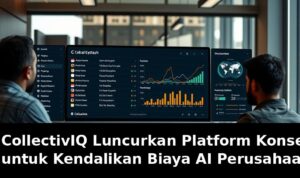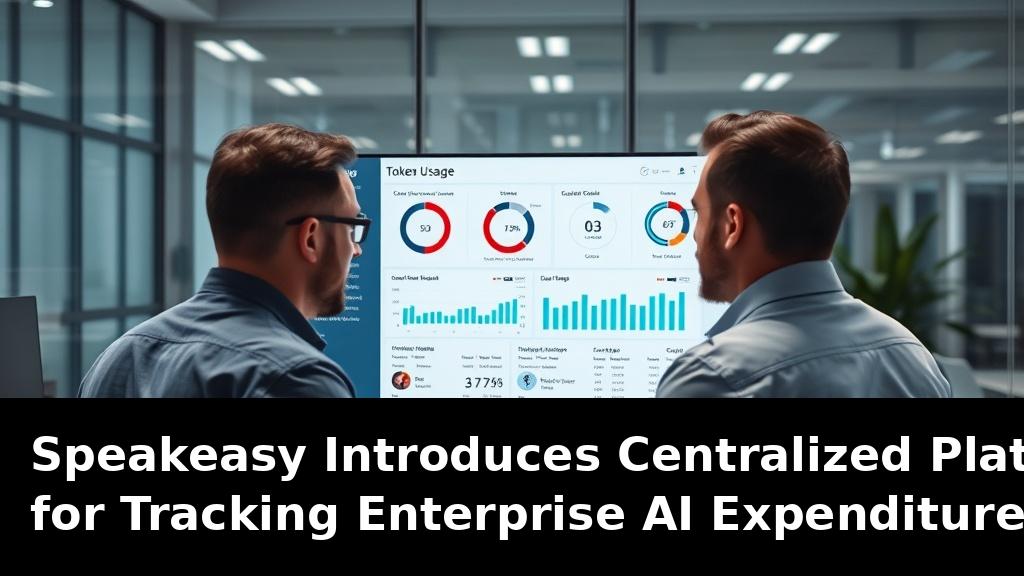
Speakeasy Development Inc. has launched an AI Cost Control service designed to provide organizations with a unified overview of spending on artificial intelligence tools. The platform aggregates usage information from multiple AI coding agents and related applications, enabling enterprises to monitor token consumption and associated costs across different vendors.
The service integrates data from tools such as Anthropic’s Claude Code, Anysphere’s Cursor, Claude Cowork, and OpenAI’s Codex. By collecting detailed usage metrics, the system records token volumes and translates them into financial reports that can be reviewed at the organizational level. This approach addresses the challenge of dispersed AI tool adoption, where individual teams may deploy various agents without centralized oversight.
Enterprise adoption of AI coding assistants has accelerated in recent years, creating new demands for financial visibility. Unlike traditional software licenses with predictable fees, AI agent usage often follows consumption-based models that fluctuate with project intensity. Without consolidated tracking, finance and technology teams may encounter unexpected variances in monthly operational expenses.
One notable aspect of the Speakeasy offering is its focus on multi-tool aggregation. Many organizations simultaneously employ several AI platforms for different workflows, resulting in separate billing streams that are difficult to reconcile. The new service consolidates these streams into a single dashboard, allowing decision-makers to identify high-cost areas and adjust resource allocation accordingly.
Another relevant consideration involves the alignment of AI spending with broader FinOps practices. Companies that have established cloud cost management frameworks can extend similar principles to AI workloads. Token-level granularity provides data points that support forecasting, budget setting, and identification of underutilized subscriptions across departments.
Implementation of such monitoring tools also carries implications for vendor negotiations. When usage patterns are visible in aggregate, procurement teams gain leverage to discuss volume discounts or tiered pricing with AI providers. This transparency may encourage more disciplined consumption habits among development teams, as awareness of costs influences how and when AI agents are invoked.
Data privacy and access controls remain central to enterprise evaluations of any cost-management solution. The Speakeasy service collects usage telemetry rather than underlying code or prompts, which limits exposure of proprietary information while still delivering the required financial insights. Organizations can therefore integrate the platform without compromising the confidentiality of their development activities.
As AI agent usage continues to expand beyond experimental projects into production environments, the ability to attribute costs accurately becomes increasingly important. Speakeasy’s introduction of a dedicated tracking service reflects growing recognition that financial governance must evolve alongside technological capabilities. Enterprises that implement structured oversight early may be better positioned to scale AI initiatives sustainably while maintaining control over associated expenditures.