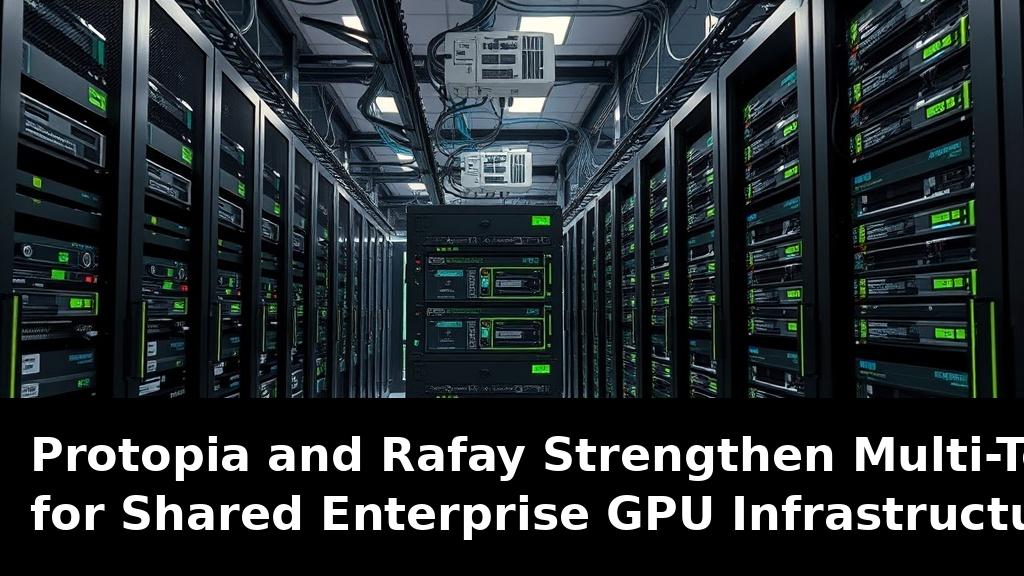
Enterprise AI infrastructure providers are increasingly adopting multi-tenancy models combined with robust data protection mechanisms. This approach allows organizations to transform underutilized GPU resources into secure, metered services suitable for broader enterprise adoption.
The collaboration between Protopia and Rafay focuses on delivering multi-tenancy capabilities specifically tailored for shared GPU environments. These environments function as AI factories where multiple users or departments can access high-performance computing resources without compromising isolation or security standards.
Multi-tenancy in this context addresses a core challenge in AI deployments: balancing high utilization rates with stringent security requirements. By enabling secure sharing of GPU clusters, enterprises can reduce idle capacity while maintaining compliance with data governance policies.
One key aspect of this development is the integration of upstream data protection techniques. These techniques ensure that sensitive information remains isolated across tenants, even when workloads run on the same physical hardware. Such measures are essential as AI workloads often involve proprietary datasets and models.
The market shift toward treating utilization and security as interconnected priorities reflects broader trends in enterprise IT. Organizations are moving away from siloed infrastructure toward consolidated platforms that support both efficiency and risk mitigation.
In practice, this model supports token-metered services, where usage is tracked and billed based on actual consumption. This aligns infrastructure costs more closely with business outcomes, encouraging wider adoption among enterprises that previously hesitated due to security concerns.
Background considerations include the growing complexity of AI supply chains and the need for infrastructure providers to differentiate through advanced sharing technologies. Providers that successfully implement multi-tenancy can offer more flexible deployment options without requiring dedicated hardware for each user.
Another relevant context is the evolution of orchestration tools that underpin these shared environments. Solutions like those from Rafay facilitate the management of containerized AI workloads across multi-tenant setups, ensuring consistent performance and policy enforcement.
Overall, the partnership highlights how infrastructure innovation is responding to demands for scalable, secure AI operations. Enterprises stand to benefit from improved resource efficiency while upholding necessary protections for their data and intellectual property.